The problems plaguing the U.S.
petroleum industry, including historically low oil prices and
mounting job losses, will get some scrutiny at a special hearing
Thursday morning before the Senate Energy and Natural Resources
Committee.
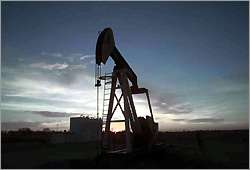
J. Pat Carter/AP |
|
| While consumers are benefiting from lower energy prices, the
Senate committee will look at how oil producers and related
industry workers are suffering
|
|
A long list of witnesses from the government and private
sector will give their assessment of the current state of the
oil industry during what is expected to be a three-hour hearing.
The hearing is set to begin at 9 a.m. EST.
Those testifying include Jay Hakes, administrator of the
Energy Information Administration, which is the statistical arm
of the U.S. Department of Energy; Exxon Corp.'s Chairman and
Chief Executive Officer Lee Raymond and North Dakota Gov. Edward
Schafer, who will speak on behalf of the Interstate Oil and Gas
Compact Commission.
The price of oil is at the lowest level in a generation,
making a gallon of gasoline cheaper than a trip to McDonald's.
Worldwide crude oil prices fell below $13 a barrel in 1998 and
are still hovering there, down from an average of $17 to $21 a
barrel in the previous 10 years.
While consumers are benefiting from lower energy prices, the
Senate committee will look at how oil producers and related
industry workers are suffering as a result. Big U.S. oil
companies cited plunging oil prices as the reason why their 1998
fourth-quarter earnings were whacked by special charges, leading
to net losses, in some cases.
The U.S. oil industry, including support services, lost
21,000 jobs in the 12 months to October 1998, a decline of about
6 percent of the total oil workforce, according to the latest
U.S. Department of Labor data.
In addition, there are thousands of employees whose jobs are
still to be cut, in layoffs already announced by major oil
companies.
J. Pat Carter/AP |
|
| With crude prices so low, it is cheaper to buy foreign oil
than drill for it domestically
|
|
Many of those jobs will be lost as the result of oil
companies merging. The oil industry's ongoing consolidation and
the pending merger of Exxon and Mobil Corp. are expected to be
discussed at the hearing.
While big oil companies are surviving the current crisis,
many independent oil producers, which account for a large part
of the U.S. oil supply, are not faring as well.
The committee will review the problems independent oil
producers are having and consider possible relief that Congress
and the Clinton administration can provide, such as tax credits
and buying oil for the nation's Strategic Petroleum Reserve. The
reserve was created in 1973 during the Arab oil embargo to
provide the United States with an emergency oil supply.
With crude prices so low, it is cheaper to buy foreign oil
than drill for it domestically, which has caused U.S. oil
production to reach the lowest level since 1954.
Growing U.S. dependence on oil imports is a major concern of
Senate Energy Committee Chairman Frank Murkowski, an Alaska
Republican, who will raise the subject at the hearing.
A lot of that oil is coming from Iraq, which has become a
major supplier of oil to the U.S. market. In the first 11 months
of 1998, Iraq shipped 106.93 million barrels of oil (320,000
barrels a day) to the United States, making Iraq the
seventh-biggest U.S. crude supplier during the period, according
to the Department of Energy.
Murkowski is very critical of U.S. oil purchases from Iraq,
and has criticized the Clinton administration for seeking to
lift the ceiling on the amount of oil Iraq is allowed to sell
under a special United Nations oil-for-food program. That
program, which began in December 1996, is an exemption to the
oil embargo imposed on Iraq after it invaded Kuwait in August
1990, which led to the Gulf War.
Saudi Arabia is the largest oil supplier to the United
States, followed by Venezuela, Mexico, Canada, Nigeria and
Angola.