Expanding manufacturing activity and mounting
retail sales paced by consumer electronics and home furnishings are
still producing strong growth in the U.S. economy with only limited
consumer price increases, the Federal Reserve reported today.
The Fed survey, compiled from reports from its 12 regional
banks, also said labor markets remain tight around the country.
That means employers are having difficulty finding workers to fill
job openings, something that economists fear could lead to wage and
price inflation down the road.
But "despite faster wage growth for some workers, increases in
the prices of final goods and services were limited overall,
although the prices of transportation services and some industrial
commodities rose noticeably," the Fed said.
The survey, known as the "beige book" for the color of its
cover, will be used when Fed policy-makers meet March 21 to review
the central bank's stance on interest rates. The beige book was
based on information collected before Feb. 29.
Many economists believe the Fed will boost rates again at that
meeting in a further effort to slow economic growth to a pace that
will keep inflation in check. Four times since June the central
bank has raised rates by a total of a full percentage point to 5.75
percent, making borrowing more expensive for millions of consumers
and businesses.
Still, economists said those actions have had little impact in
cooling the red-hot economy, which grew at a breakneck 6.9 percent
annual rate in the last three months of 1999.
Fed Chairman Alan Greenspan on Monday expressed new worries
about an overheated economy and sounded a warning that interest
rates will be raised if the economy doesn't slow.
The U.S. economy's current expansion became the longest in U.S.
history at 107 months in February and this month is celebrating its
ninth birthday.
Greenspan, in a speech today to the Independent Community
Bankers of America in San Antonio, Texas, cautioned banks to
maintain their lending standards in the face of the remarkably
strong economy. Even though he did not discuss interest rates or
monetary policy, Greenspan's remarks contributed to Wall Street
investors' nervousness because they echoed his concerns about
Americans' inflated expectations of the economy.
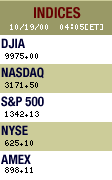
Investors were in more of a buying mood today following major
losses on Tuesday. In midafternoon, the Dow Jones blue-chip average
was up 70 points while the Nasdaq was down 16.
In its latest snapshot of the economy, the Fed said today: "The
majority of districts reported strong growth during the survey
period, with the remaining reports pointing to moderate growth or
continued high levels of activity."
In the manufacturing sector, most districts reported a pickup in
activity in January and February, the Fed said. "The gains were
moderate in general although Richmond's report indicated
considerable strengthening."
Sales of semiconductors and other high-tech equipment were
strong in Dallas and San Francisco, the survey said. Demand for a
variety of other manufactured products grew substantially including
metal products, electronics and furniture, the survey said. Demand
for steel was especially strong, largely for use in the production
of cars and other big-ticket manufactured consumer goods.
On the retail front, the Fed found sales were strong in most
areas and either met or exceeded merchants' expectations.
Sales of consumer electronics, appliances and home furnishings
posted the biggest gains, the survey said. Demand for cars and
light trucks was solid with sales matching or surpassing activity
reported for the same period a year ago.
Some districts, however, reported sluggish sales of clothing.
Despite rising mortgage rates, residential construction activity
and sales of new homes remained strong in many areas. But there
were signs of cooling in the Atlanta and Kansas City districts and
in several states in the San Francisco district.